MongoDB vs PostgreSQL: Which Database Is Better for Your Projects?
A side‑by‑side comparison of MongoDB and PostgreSQL, covering data models, performance, scalability, and real‑world use cases to help you choose the right database for your application.
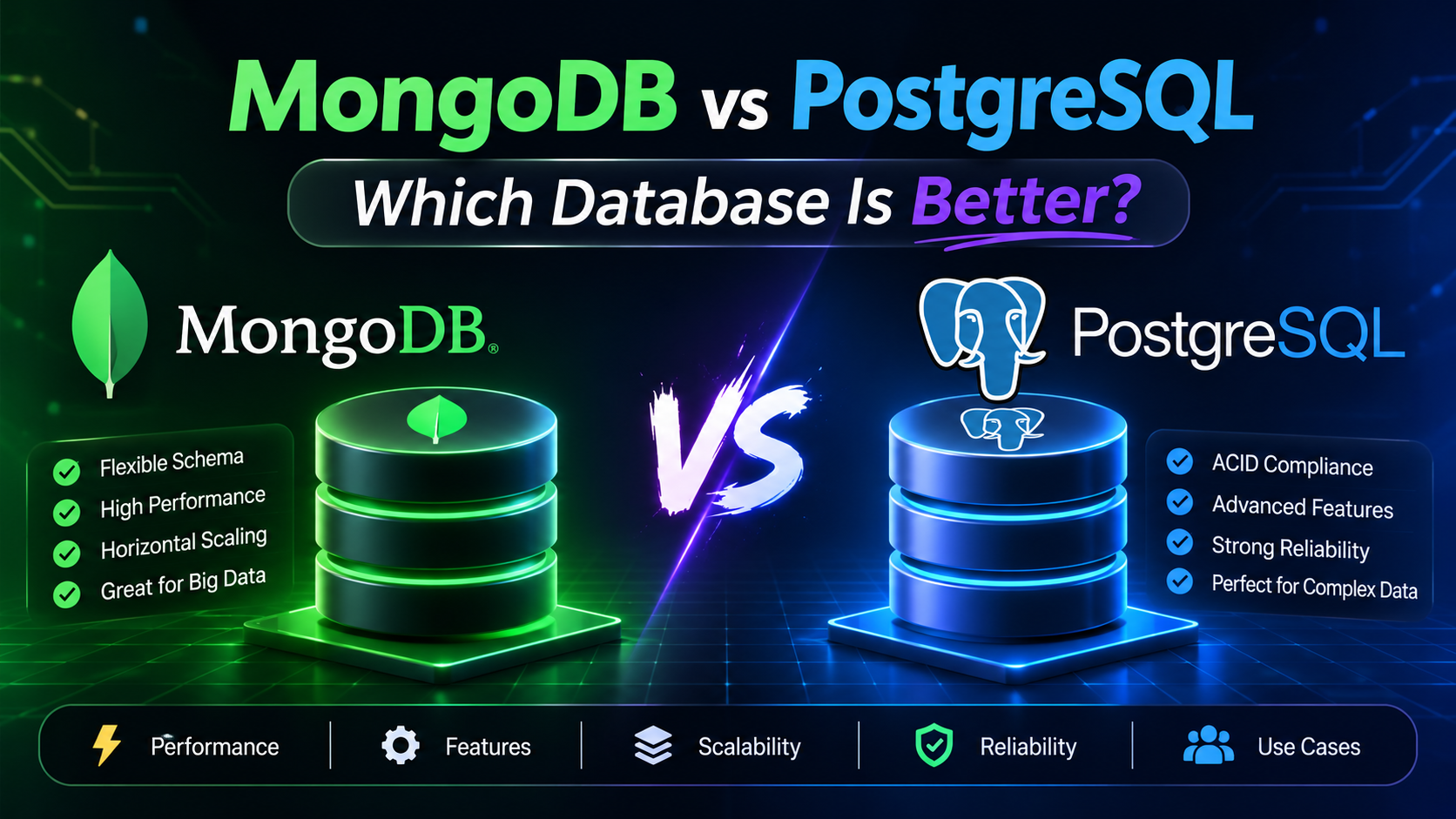
Choosing the right database can shape the success of a project. MongoDB and PostgreSQL represent two dominant philosophies—document‑oriented NoSQL and relational SQL—each with distinct strengths. This article breaks down their core differences, operational considerations, and typical scenarios to help you make an informed decision.
Understanding the Core Differences
At a high level, MongoDB stores data as flexible JSON‑like documents, while PostgreSQL organizes data into rows and columns defined by a strict schema. This contrast influences how developers model data, enforce integrity, and query information.
Data Model
MongoDB’s document model allows nested structures and arrays within a single record, reducing the need for joins. For example, a user profile with an embedded address array can be stored in one document. PostgreSQL, by contrast, requires separate tables for related entities, using foreign keys and joins to assemble the same information.
Schema Flexibility
MongoDB is schema‑less by default, letting you add new fields to a document without affecting existing records. PostgreSQL enforces a fixed schema, which ensures data consistency but requires migrations when the model evolves.
Operational Considerations
Beyond data representation, factors such as deployment, scaling, and transactional guarantees affect day‑to‑day operations.
Performance and Query Patterns
For read‑heavy workloads that retrieve whole documents, MongoDB often delivers lower latency because the data is co‑located. A typical example is a product catalog where each item’s specifications are stored together. PostgreSQL excels with complex analytical queries, especially those involving aggregations across many rows, thanks to its mature query planner and indexing options.
Transactions and Consistency
PostgreSQL has offered ACID‑compliant transactions since its inception. MongoDB added multi‑document transactions in version 4.0, but they carry additional overhead and are generally used only when strong consistency is essential. If your application relies on strict financial or inventory accounting, PostgreSQL’s proven transaction model is often the safer choice.
When to Choose MongoDB
MongoDB shines in scenarios that benefit from flexible schemas and rapid iteration.
Rapid prototyping where the data model evolves frequently.
Content management systems, IoT data streams, or any domain with heterogeneous data.
Applications requiring horizontal scaling across many commodity servers.
Geospatial queries and full‑text search built into the database.
When to Choose PostgreSQL
PostgreSQL is well‑suited for workloads that demand relational integrity and sophisticated querying.
Financial systems, inventory management, or any domain where ACID compliance is non‑negotiable.
Complex reporting, data warehousing, and BI dashboards.
Projects that benefit from advanced features such as window functions, common table expressions, and native JSON support.
Environments where a single, vertically scaled instance can handle the load efficiently.
Hybrid Approaches
Many modern architectures combine both databases, using PostgreSQL for core transactional data and MongoDB for auxiliary, schema‑flexible workloads. This polyglot persistence strategy lets you leverage the strengths of each system without compromising overall data integrity.
Choosing a database is less about “better” and more about “fit for purpose.” – General best practice
Making the Decision
There is no universal winner. Evaluate your project’s data complexity, consistency requirements, expected query patterns, and scaling strategy. If flexibility and horizontal scaling dominate, MongoDB is a strong candidate. If relational integrity, complex analytics, and mature transaction support are paramount, PostgreSQL is likely the better fit. In many cases, a hybrid solution provides the optimal balance.