Inside Netflix: Scaling to Serve Millions of Users at Once
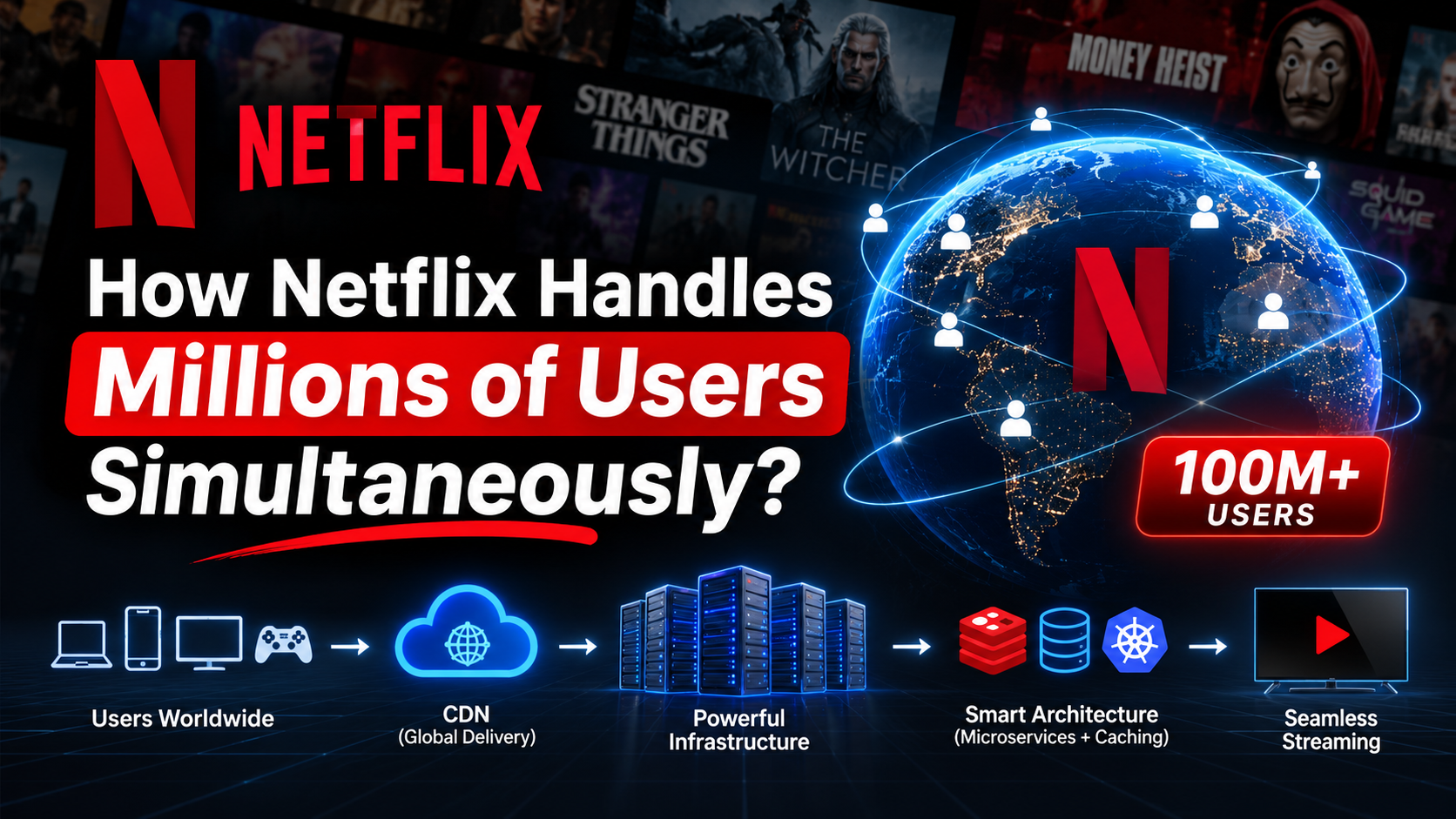
Explore the architecture, CDN strategy, and microservices that enable Netflix to stream video to millions of concurrent viewers worldwide.
Introduction
Netflix has become synonymous with on‑demand entertainment, but behind the glossy UI lies a complex engineering effort that allows the service to deliver high‑quality video to millions of users at the same time. This article breaks down the core components of Netflix’s scaling strategy and explains why it remains a benchmark for large‑scale web services.
The Challenge of Global Scale
Serving a global audience means handling unpredictable traffic spikes—think a new season drop or a major sporting event. Netflix must guarantee low latency, high availability, and consistent video quality across continents, all while managing a catalog of terabytes of content.
Microservices Architecture
Netflix migrated from a monolithic Java application to a microservices ecosystem in the early 2010s. Each service owns a specific business capability—catalog, user profiles, playback, recommendation, and so on. This decomposition provides:
Independent scaling: services that experience higher load (e.g., playback) can be replicated without affecting others.
Fault isolation: a failure in the recommendation service does not bring down streaming.
Rapid deployment: teams can release updates without coordinating a massive codebase.
All services communicate over Eureka for service discovery and use Ribbon for client‑side load balancing.
Edge Delivery with CDNs
Netflix does not host video files in a single data center. Instead, it stores content in Amazon S3 and leverages a custom CDN called Open Connect. Open Connect appliances are placed inside ISPs worldwide, caching popular titles close to end users. Benefits include:
Reduced backbone traffic—data travels a shorter distance.
Lower latency, which directly improves start‑up time and reduces buffering.
Control over bitrate distribution, ensuring that high‑definition streams are available where bandwidth permits.
For regions without an Open Connect node, Netflix falls back to public CDNs like Akamai or CloudFront.
Adaptive Streaming and Load Balancing
Netflix uses Dynamic Adaptive Streaming over HTTP (DASH) and HLS to segment video into small chunks (2–10 seconds). The client continuously measures available bandwidth and selects the appropriate bitrate. This approach spreads load evenly across multiple edge servers because each chunk request can be routed to a different cache.
Load balancers such as NGINX and Amazon ELB distribute incoming requests across service instances, while Zuul acts as an API gateway, handling authentication, routing, and throttling.
Resilience Through Chaos Engineering
Netflix pioneered Chaos Monkey—a tool that randomly terminates instances in production to verify that the system can self‑heal. Over the years this suite expanded to include latency injection, network partitioning, and DNS failures. By constantly testing failure scenarios, Netflix ensures that its architecture can sustain massive traffic without a single point of failure.
Practical Example: A New Episode Release
When a highly anticipated episode drops, Netflix follows a coordinated sequence:
Pre‑warm caches: Open Connect appliances receive the new files hours before release.
Feature flag rollout: The playback service enables the new title for a small user segment to monitor performance.
Full rollout: Once metrics are stable, the feature flag is lifted globally, and the CDN serves the content to all regions.
Real‑time monitoring: Tools like Atlas and Spectator track error rates, latency, and buffer events, triggering automatic scaling if thresholds are crossed.
This disciplined pipeline prevents the “flash crowd” effect that once crippled other streaming platforms.
Conclusion
Netflix’s ability to serve millions of concurrent viewers stems from a combination of microservices, edge‑focused CDNs, adaptive streaming, and a relentless focus on resilience. By designing each layer to scale independently and by continuously testing failure modes, Netflix turns a massive engineering challenge into a reliable, everyday experience for its users.